


Dear Brothers and Sisters,
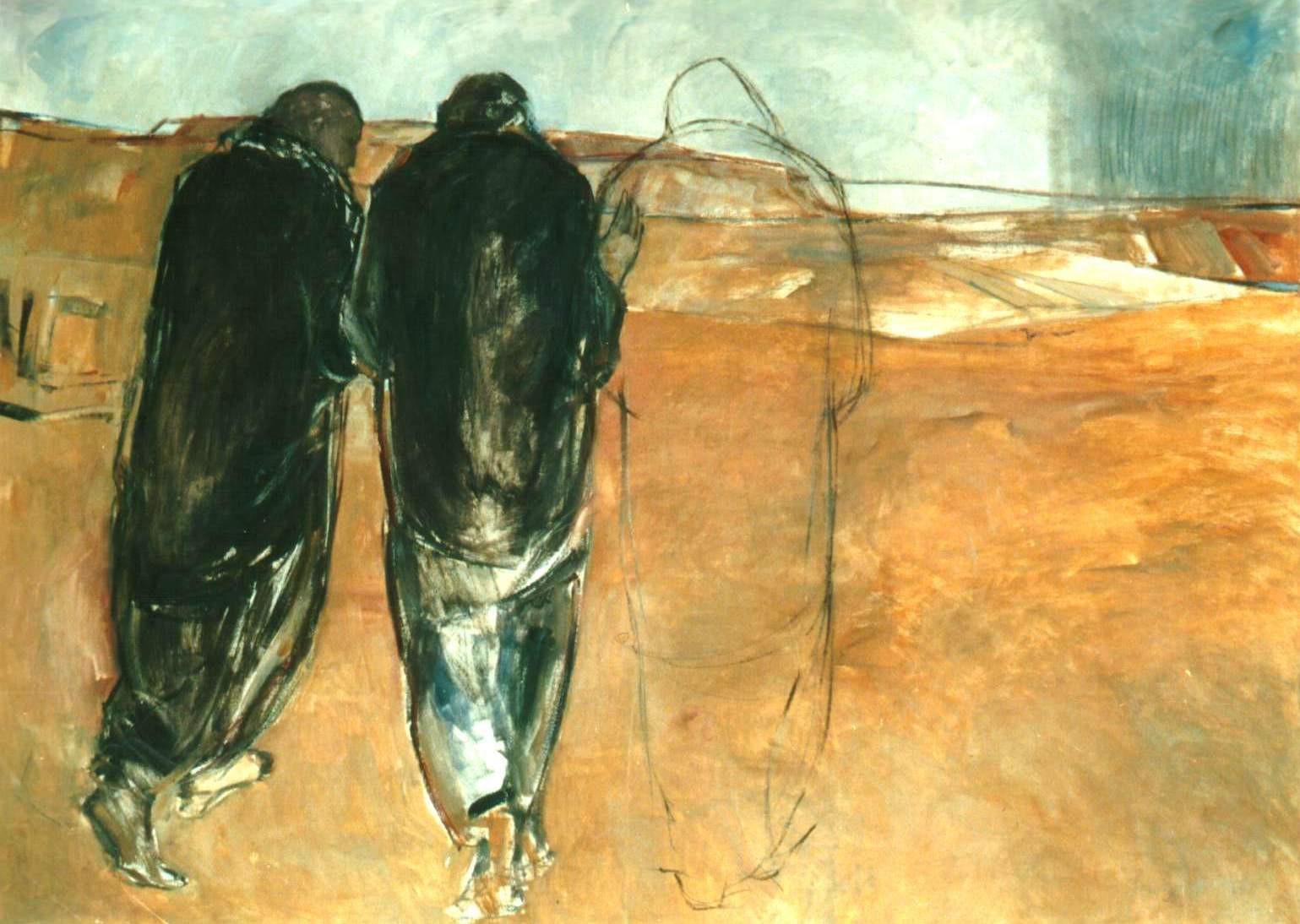
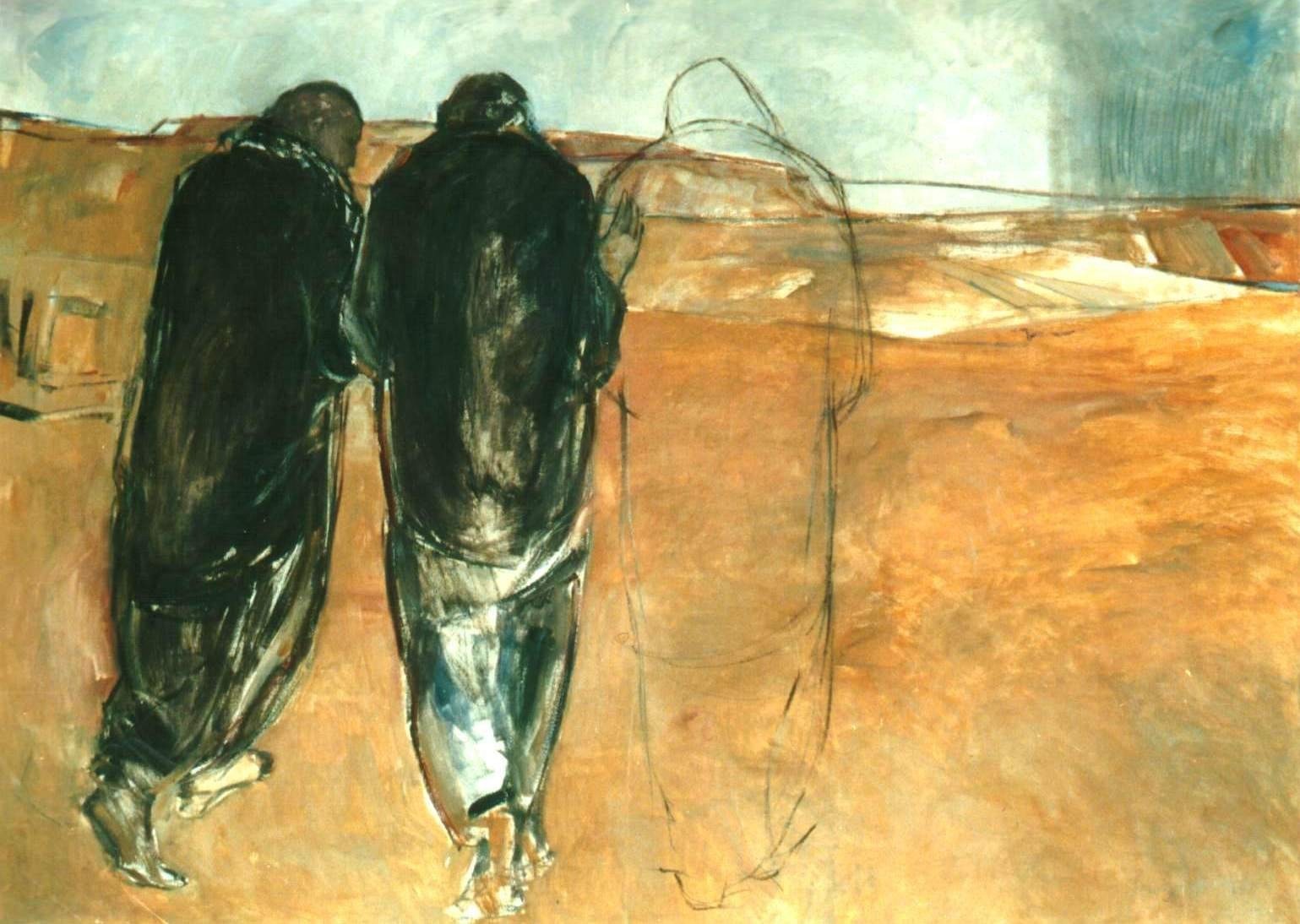
Our Gospel this weekend continues the Easter narrative. It is later in the day on Easter Sunday. Jesus has arisen and the word has spread, but for some it has added to their fears rather than alleviating them. The truth of the resurrection of Jesus has not set in and fearing repercussions from the leaders of the Israel and the Romans, Jesus followers are dispersing. Our Gospel picks up with two of Jesus’ disciples heading off to Emmaus, which may possibly be their home village, about seven miles outside Jerusalem.
As they are leaving the city the issue of Jesus’ and the news about him is the center of their conversation. They are, ‘conversing and debating’, which tells us it must have been a very emotional conversation as they struggle to put things together. Unbeknownst to them, Jesus appears and makes it seem that he wants to join them on their journey. They do not recognize him because his identity is kept hidden. This disguise has a divine purpose. Jesus will slowly be revealed to them in the scriptures and the Eucharist he will celebrate with them. With this, their eyes will be opened both literally and spiritually.
Jesus asks them what they are speaking about. They are depressed. Luke describes them as looking, ‘downcast’. They are disillusioned, their expectations about Jesus dashed as he accepted the Cross. Thinking themselves more informed than their newly arrived companion, who seems ignorant of the things that have happened to Jesus, they explain their disappointment and disillusionment, ‘of the things that have taken place.’ How they had placed their hopes in Jesus as being someone sent by God, but his trial and death have left them in a tailspin, and then the news this morning of his missing body and tales of angels and appearances as left them troubled and confused.
These companions on the journey have not come to faith. Their struggle and confusion is proof of this. They refer to Jesus as a ‘Prophet, mighty in word and deed’, but they do not realize who Jesus truly is. They have not accepted him as the Son of God. They speak of his crucifixion, the most horrible and humiliating death he suffered and how their hopes have been dashed that he might have been the one to, ‘redeem Israel’. However, it is they who are misinformed. They are ignorant of Jesus true mission and identity. They do not understand the reports of Peter and the others that he has truly risen. Jesus will now enlighten them and open their minds.
Here the roles change and the balance of true knowledge shifts. Now the unrecognized visitor will remove their ignorance. Beginning with the scriptures he begins to share with them all that has been revealed about him and his mission. The scriptures reveal God’s intention, and the crucifixion is not the folly they believe it to be, but in actuality all part of the divine plan to redeem not only Israel but all of creation. That he was meant to suffer and die and rise in glory, that he is not only a prophet, but truly God’s Messiah. Here he interprets for them all that refers to him in the holy writings from Moses through all the prophets.
As they reach their appointed end of their journey and arrive in Emmaus, he feigns that he is going on farther. The two companions emphatically insist he stay with them and be their guest. Jesus agrees and goes into the house to stay. It is the end of the day and sitting down with them to dine he takes the bread, says the blessing, breaks it and gives it to them. This is the Eucharistic action. The same action he performed over and over again, at the multiplication of the loaves and the fishes, at the last supper and now in his risen form with them at table. In the last supper he instituted this action as the Eucharistic presence, the way he would continue to be made present to his disciples for all eternity. It is in this moment that they recognized him and he vanishes from their sight, but he is still present in their midst under the Eucharistic species. Luke uses some very important words here, ‘their eyes were opened’. These same words in Greek are only used one other time in scripture, at a meal, but in a very, very different moment. Adam and Eve ate of the apple, ‘and their eyes were opened’ (Genesis 3:7). They had eaten of the tree of Knowledge and the fall had occurred. Here these men had eaten the Eucharist – and ‘their eyes were opened’ to knowledge of their savior and the gift of his salvation. Adam and Eve ate of the tree of Knowledge and brought death, these men ate of the Bread of Life and have become a new creation.
Jesus vanishes. His glorified presence is no longer needed. However, he is still with them in the breaking of the bread. Where they started their journey alone, their encounter with the Lord and with his Eucharistic presence has now given them new life. They were fleeing the city, fearful and overwrought and now with their hearts, ‘burning within them’ from their encounter with Jesus, they set off with no fear of darkness, or of what lies possibly in wait for them in Jerusalem to share the good news.
Upon reaching the eleven and those gathered with them, they receive the incredible news of Jesus appearance to Simon Peter. It’s after receiving this news that they are able to share their own incredible story of how he was made known to them in the breaking of the bread.
Over and over again in the resurrection accounts Jesus appears to his disciples in many ways. In several of the accounts he is not just physically present, but he is present sacramentally as well. Jesus, always the Master and Teacher, is helping his brothers and modeling for them - still showing them that he is always with them in his Body and Blood. In this Gospel passage Jesus vanishes from their sight. Why? He vanishes from their sight – their eyes, but he is still present to them because those who see him in the flesh will now be able to receive his very flesh and blood. Where? In the Eucharist he is still there with them ready to feed their hungry souls. He is present to us too when we gather at our family table together each Sunday. May our hearts burn within us as we listen to his Word and encounter him in the Eucharist.
I would ask you to consider, how many times have you received the Eucharist carelessly, or thoughtlessly? Jesus comes to you to feed you. To show you how much he loves you and having been fed, sends you forth to feed others. May the burning fire of his love fill your heart as you come forward and with a word – ‘Amen’, open yourself to receive him.
Easter Blessings,
Fr. Steve