
Dear Brothers and Sisters,
Happy Easter and Blessed Divine Mercy Sunday.
A few brief words of thanks to all who helped to make our Holy Week and Easter Celebrations so memorable. From the people who made our environment so beautiful, to our choirs and musicians who helped us celebrate with Joy. To our Servers, Lectors, Eucharistic Ministers, Ushers and my Brother Priests, my sincere thanks! A special thanks to our Pastoral and Support Staff who worked weeks in advance helping to prepare for these days. Thank you one and all and God Bless you!
Our gospel on this feast of Divine Mercy picks up where our Easter gospel left off. Mary Magdalene does as the Lord had bid her and she goes to share the Good News with the disciples. The disciples for their part have struggled to believe the message. Note the time of day. John tells us it is evening. Mary went to the tomb just before dawn. As always light plays a very symbolic role in John’s gospel. Darkness represents unbelief. Those who fail to put their faith in Jesus are stumbling around in the dark. The darkness is a place of fear. Mary started in darkness at the tomb, but as the sun rose, she began to see the light in her encounter with Jesus. Once enlightened she runs to share the news. Now in the upper room we are told it is dark and the door was locked out of fear. The disciples are frightened. They fail to see the light. The locked door is an attempt to keep the darkness at bay. But it is into this darkness that Jesus comes unbidden shattering all their fears.
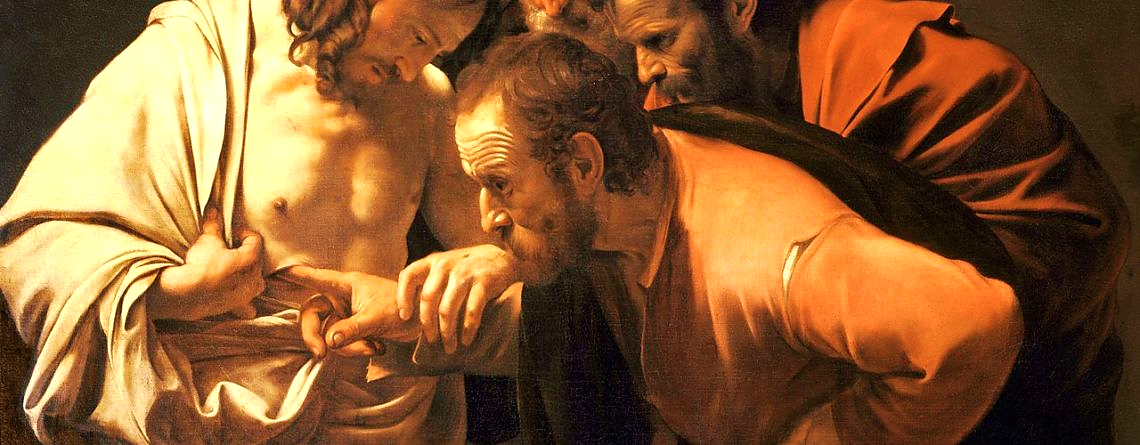
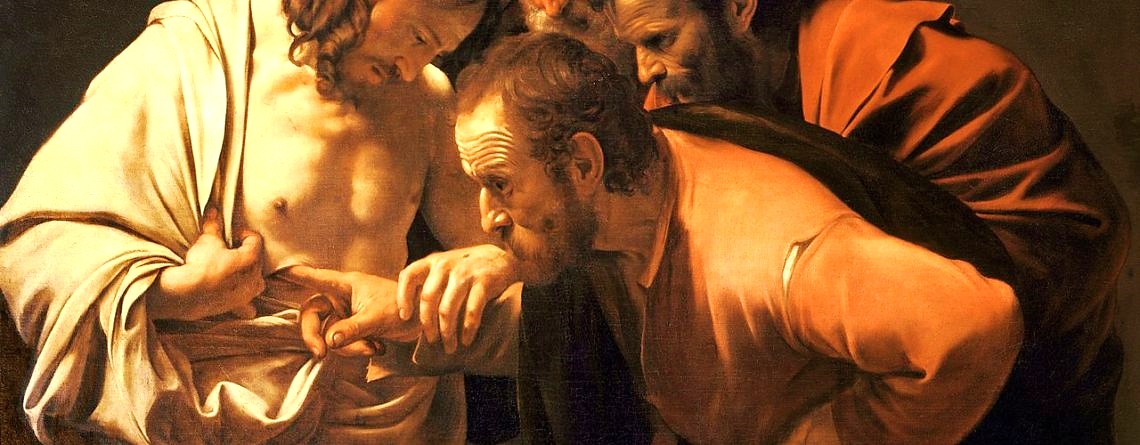
Notice Jesus’ first words to his disciples? Not words of condemnation, but a word of forgiveness. Here the risen Christ stands in their midst and his first act is one of reconciliation. The disciples are incredulous with joy. And now he doubles down by further showing them his hands and his side. It is not an act of aggression – as if to say, ‘Look at what you let happen to me!’, but it is an act of proof. As if to say, ‘Look, see, it is really I!’ The glorified body of the Lord is the same body that was crucified, but now transformed. It is obvious that Jesus does not see his wounds as the result of evil as they may have been intended, but as a means of forgiveness. St. Thomas Aquinas, many years later would refer to them as the victor’s ‘trophies’ of battle. The risen Jesus doesn’t need his wounds, he has been glorified. Instead, you might say he wears them as a badge of pride as if to say, ‘See what I did for you!’ As if to say to the Apostles and to you and me, ‘I love you this much’ and I wear these wounds proudly as proof.
Next Jesus breathes on them. This is important. If we go back to the very beginning in Genesis, we are told that God’s breath or ‘ruah’ (Genesis 2:7), brought life to creation. Here Jesus breathes new life into the disciples. These men cowering in the dark behind locked doors are given new life. This is John’s representation of Pentecost. As the disciples receive the Holy Spirit, Jesus also draws them into his Mission and makes them envoys sent to carry out his work in the world. This new gift is the divine assistance they need to leave the darkness behind. He gives them divine instruction, ‘whose sins you forgive are forgiven them, and whose sins you retain are retained.’ Jesus the Lamb of God who takes away the sins of the world now incorporates his disciples into that mission and gives them the divine power of forgiveness and the ability to share God’s mercy. The disciples, now filled with new life begin the work of sharing the good news and like Mary Magdalene, they reach out first to those closest to them – namely Thomas, who was absent. We are told however, that Thomas refuses to believe till he has physical proof.
A week later they are again in the upper room with the doors locked and Jesus comes and stands in their midst. He again greets them with words of forgiveness, ‘Peace be with you’. This time Thomas being present, Jesus immediately turns to him and invites him to have the proof he needs inviting him to touch his wounds and see that it is truly him and that he is not a phantom or a ghost, but alive. He challenges Thomas to cease in his unbelief. Thomas’ response is immediate and perfect. ‘My Lord and my God!’. The words Lord (Greek ‘Kyrios’) and God (Greek ‘Theos’) are found throughout the Old Testament, most especially in the psalms and Thomas’ use of it makes clear Jesus divine sonship. The scene ends with Jesus’ statement on belief without seeing – a direct reference to us as the readers of the gospel who unlike Thomas have not touched his wounds but accept him as Lord and God none the less.
The Holy Father, Pope Francis was quoted as saying, “Mercy is where love meets suffering”. I think this weekend’s gospel for the second Sunday of Easter illustrates this perfectly. We are in the upper room in darkness and fear, gathered with the disciples. It has been only hours after the resurrection and the disciples have received word from Mary Magdalene that she met the risen Lord, but fear and anguish, self-loathing for their cowardice and their abandonment of the man they called ‘Lord’ consumes them. Here behind locked door Jesus suddenly stands, alive and whole with his wounds for all to see. His first words to them are words of peace and forgiveness, ‘Shalom’. The very first words to his closest friends only a short time after they all fled and abandoned are words of forgiveness! Remarkable! Where you or I might be angry or vengeful for the failure of others, Jesus is all loving and forgiving. That is divine mercy in action! Then he shares the gift of the Spirit with his disciples by breathing on them and giving them new life, commissioning them to share the that same gift of Mercy with the world – that is divine Mercy in action! Think of those words of the Holy Father, ‘Mercy is where love meets suffering’. In that moment the Lord – in an amazing act of love – swept away the pain and suffering of his friends and from his heart flowed that endless mercy we celebrate today.
This same mercy is available to us. To you and to me – if we ask for it. How many times have we failed to love others the way they deserved? How many times have we foisted more suffering on others by our words and deeds or our selfishness, rather than sharing forgiveness? How many times have we failed to let our love meet another’s suffering or rejected the love others have yearned to share with us because we find safety in our misery or because we don’t believe that any one can heal us – not even God? My friends, this day is for us! To remind us that there is an endless ocean of mercy waiting for us in his heart. But first we need to be present in the room. We have to choose to let the Lord be present to us. He will do the rest. All we have to do is let his love meet our suffering and the divine mercy will flow. He will do the rest!
May the Lord’s Divine Mercy overflow into your soul, heal your wounds and breathe into you new life!
Easter Peace,
Fr. Steve